Filament Cost Calculator
Work out what the plastic in one print costs you: cost per part, cost per gram, cost per kilogram, and how many more prints fit on the spool. Enter your own spool price and model weight — nothing is uploaded and nothing is stored.
Your spool and your model
Enter the numbers from your own receipt and slicer. Nothing is sent anywhere.
What this filament cost calculator does
It answers one question: how much does the plastic in this print actually cost me? Not the printer, not the electricity — just the filament. You give it the price you paid for a spool, the net weight of that spool, the grams your slicer says the model needs, and an allowance for the filament you lose along the way. It returns the cost per part, the cost per gram, the cost per kilogram, how many more prints fit on the spool, and the total for a batch.
This is the first number anyone selling prints needs, and the one most people guess at. Guessing low is how people end up selling a 60 g model for $2 and calling the remainder profit.
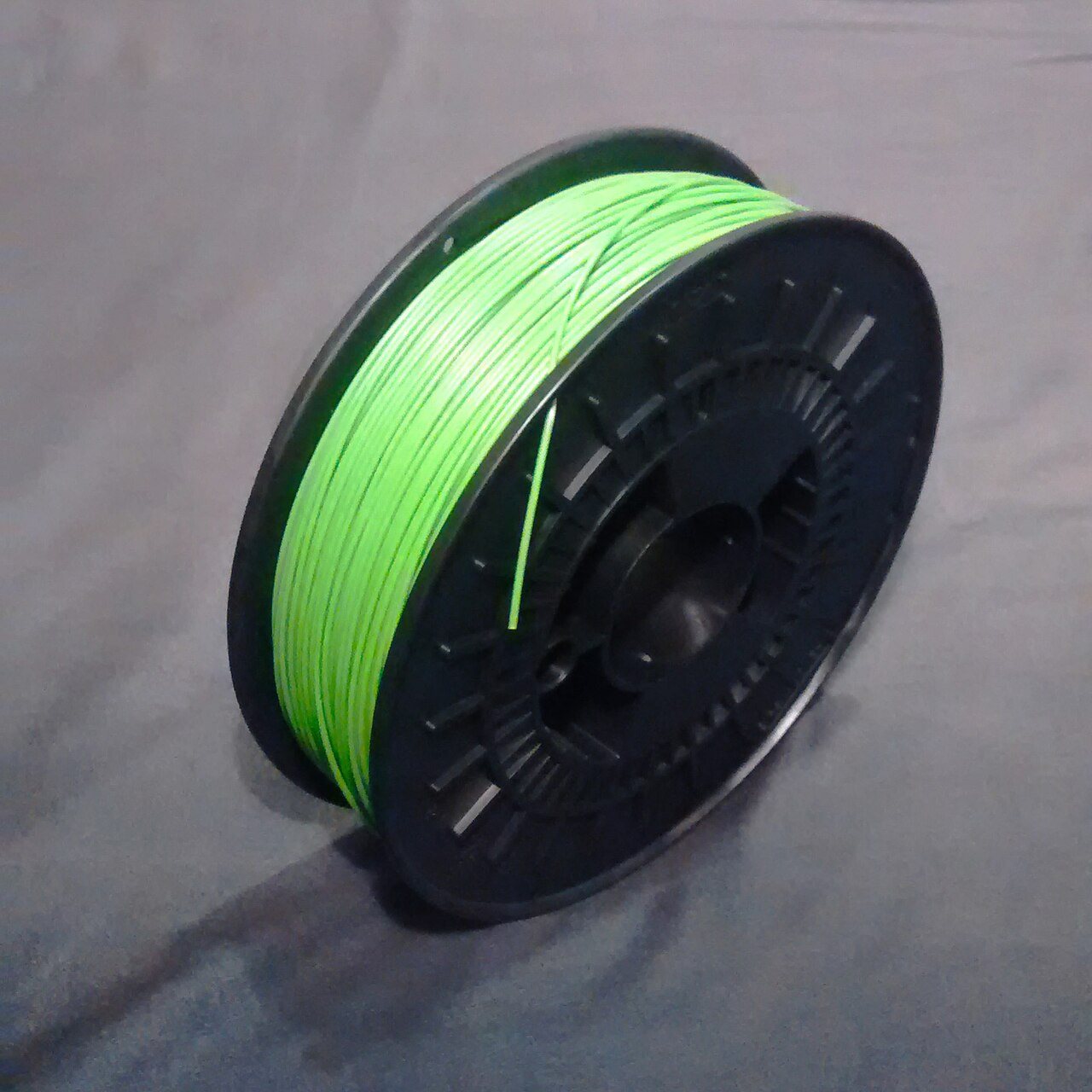
How filament cost actually stacks up
The sticker price on the spool is not your cost per gram. Three things move the real number:
- Landing cost. Shipping and tax belong in the spool price. A $19 spool with $6 shipping is a $25 spool.
- Net vs gross weight. A "1 kg spool" holds 1000 g of filament at most, and sometimes less. Cheap spools are frequently short-filled. Trust the net figure, and if you have a kitchen scale, weigh a full spool once — it is the cheapest audit you will ever run.
- Filament that never becomes your part. Purge lines, brims, supports, a failed first layer you restart, the tail left on the spool that your extruder cannot reach. On a well-tuned printer that is 8–15%. While you are still dialling in a new material it is easily double that.
That last category is why slicer estimates and reality disagree. The slicer tells you what the part needs; the spool tells you what it lost.
What is included, and what is not
Being precise about the boundaries keeps this honest.
Included: spool purchase price, net filament weight, model weight, a waste allowance you control, and quantity.
Not included: electricity, printer depreciation, nozzle and bed wear, machine time, your labour, packaging, post-processing, filament drying, failed prints beyond the waste percentage you chose, and selling fees. Those belong in the full print cost and pricing calculators.
The calculation
effective grams = model weight × (1 + waste ÷ 100)
cost per part = effective grams × cost per gram
prints per spool = net weight ÷ effective grams (rounded down)
Everything follows from those four lines. If you want a different answer, change an input rather than the formula — the assumptions are yours to set.
Worked examples
A $22 PLA spool at 1000 g is $0.022 per gram. With a 12% waste allowance, here is what different model sizes cost:
Now the same models on a $32 PETG spool at 1000 g, which is $0.032 per gram: $0.29, $1.61, $4.30 and $10.75. Same geometry, roughly 45% more material cost — because PETG costs more per kilo, not because it prints differently.
Five mistakes that inflate or hide filament cost
- Using the gross shipping weight. A 1 kg spool arrives in a 1.35 kg parcel. Dividing price by 1350 g understates your cost per gram by a third.
- Forgetting the tail. The last 20–40 g on a spool often jams, snaps or gets tangled. Counting it as usable capacity makes your "prints per spool" number optimistic.
- Setting waste to zero. It is a nice feeling and a bad number. Even a dialled-in printer purges and brims.
- Mixing currencies inside one spool. If you bought in CNY and sell in USD, convert the spool price first, not the result.
- Treating filament cost as total cost. On a 12-hour print, electricity and machine wear commonly outweigh a small material charge. This tool answers one question only.
How to use the result
- Compare spools properly. Two brands at a similar price are not equivalent if one is short-filled. Cost per gram is the only fair comparison.
- Feed it into pricing. Take the cost per part, add machine time and power, then apply your margin. Never price from the sticker price of the spool.
- Sense-check a batch quote. Multiply cost per part by quantity before you agree to print fifty of something for a fixed fee.
Important assumptions
The default values in this calculator — a $22 spool, 1000 g, 45 g per print, 12% waste — are starting assumptions, not market figures. Filament prices vary by country, material and brand, and they move. Replace every default with the numbers from your own receipt and your own slicer. The calculator multiplies and divides; it does not know your spool, your printer or your failed prints.
Questions
How much does filament cost per gram?
Divide the price you paid for the spool by its net weight. A $22 spool with 1000 g of usable filament costs about $0.022 per gram. The number changes a lot between brands and materials, so use your own receipt rather than a generic average.
Why is my print heavier than the slicer estimate?
Slicer estimates usually exclude supports, brims, purge lines and failed starts. If you add a 10–20% waste allowance you will land much closer to what the spool actually loses.
Should I count the spool and packaging weight?
No. Use the net filament weight printed on the spool (usually 1000 g, 750 g or 500 g). The empty spool and box are not printed material.
Is filament the biggest cost of a 3D print?
For small parts, yes. For long prints, electricity and machine time often exceed the material cost. This calculator covers material only — use the print cost calculator for machine time and power.
How do I price a 3D printed item for sale?
Material cost is only the first layer. Add machine time, power, failed prints, packaging, platform fees and your own labour before you set a retail price.
Does the calculator include failed prints?
Only if you enter a waste percentage. A 10–15% allowance is a reasonable starting point for a printer that is dialled in; raise it while you are still tuning profiles.